
A quick tour of context and curiosity
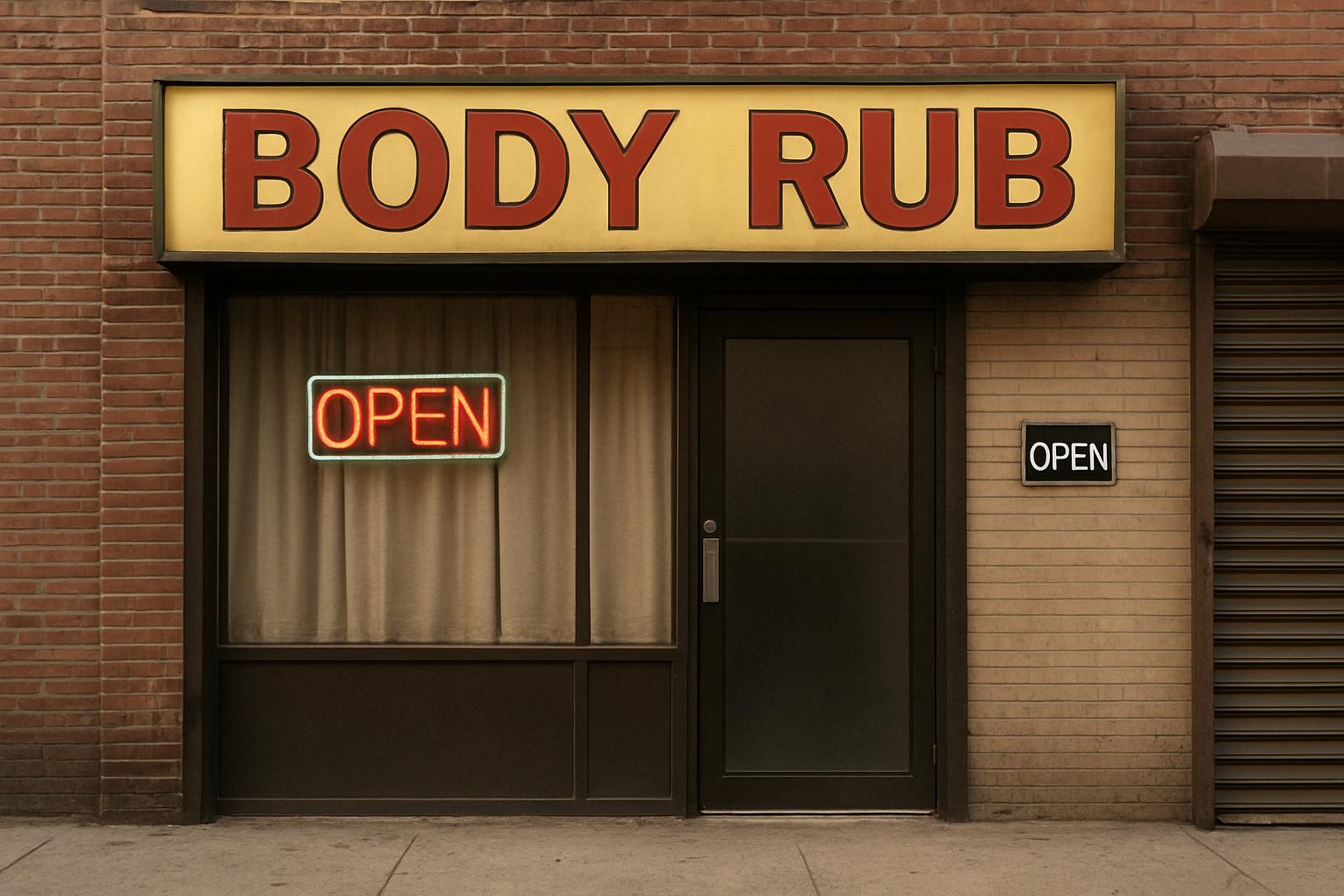
Queens is a borough of neighborhoods stacked with small businesses: bodegas, barber shops, nail salons, and places that advertise «body rubs» in small neon or modest web listings. The term itself sits on a spectrum — it can refer to legitimate therapeutic touch, to ambiguous services that blur lines, or to clearly illicit activity. That ambiguity is what draws attention and why people keep asking, quietly, what it actually means and how to navigate it safely.
Understanding the scene starts with recognizing Queens’s diversity. Immigrant entrepreneurship fuels many storefronts here, and cultural differences in marketing and services add complexity. In practice, two very different operations might use the same wording: one run by a licensed massage therapist offering rehabilitative treatment, another operating without permits and attracting police scrutiny. The difference matters for safety, legality, and public health.
The legal landscape: rules, gray areas, and enforcement
New York law treats sexual commerce and unlicensed medical or therapeutic practice as separate matters. Prostitution and solicitation are criminal offenses; practicing massage or other therapeutic services without appropriate credentials can trigger administrative or criminal penalties depending on the circumstances. Municipal authorities and state agencies both play roles: health inspectors, licensing boards, and law enforcement may become involved when complaints arise.
Those statutes create a patchwork. Legitimate clinics typically display licensure, follow public health rules, and document client consent and recordkeeping. Unlicensed establishments may operate quietly for long stretches, then face raids, fines, or closure when complaints mount. Enforcement intensity varies with local priorities, political pressure, and public reports — which means the practical reality on the street can be uneven.
How enforcement actually plays out
On the ground, responses range from administrative inspections to criminal investigations. Health departments will step in over sanitation or unlicensed medical practice; police respond to evidence of sex-for-pay schemes or trafficking. Community complaints often trigger the first visits and motivate follow-up.
It’s worth noting that enforcement mechanisms aren’t just punitive. In major cities, agencies sometimes coordinate with social services and anti-trafficking groups to offer assistance to workers who may be coerced. That’s one reason public reporting channels exist: they can protect both public safety and vulnerable people when used responsibly.
What “body rub” usually signals — legitimate services and red flags
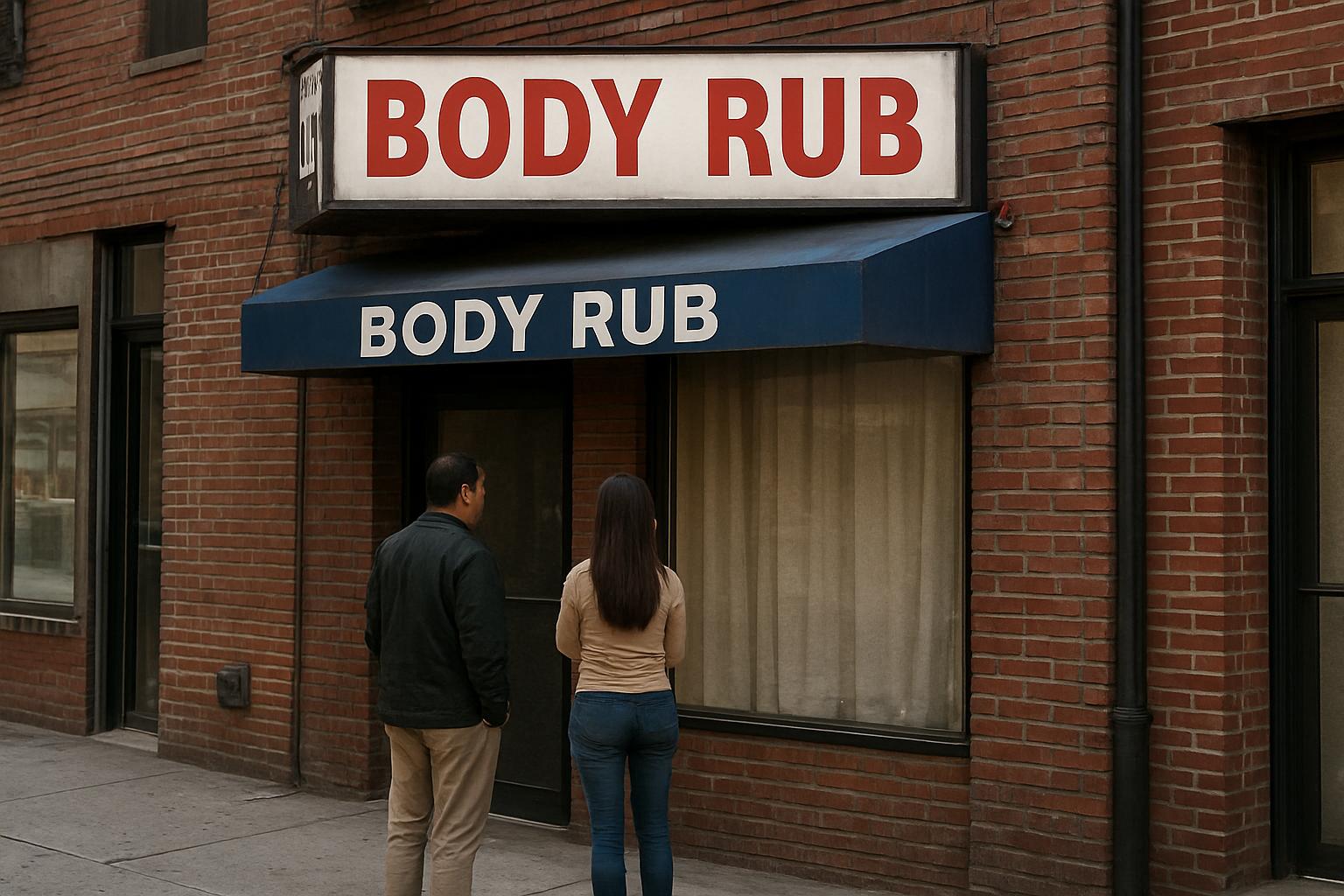
Language matters. «Body rub» can be a euphemism used to avoid direct mention of massage or sexual services. It may show up alongside terms like «spa,» «wellness,» or «relaxation room.» For a consumer, the sign on the door, the interior, and how services are described online tell most of the story.
Legitimate services often highlight the therapist’s credentials, the types of therapy offered (deep tissue, sports, prenatal), appointment systems, and transparent pricing. Less reputable operations focus on short session lengths, cash-only transactions, private back rooms, and suggestive advertising. Those latter traits are warning signs that merit caution.
Spotting a reputable place: what to look for
- Visible credentials and posted licenses for practitioners and the facility.
- Clear service menus with defined treatment types and durations.
- Professional booking practices: phone/email reservation, written intake forms, receipts.
- Transparent payment methods (card processing, receipts) and reasonable prices consistent with local market rates.
- Clean, well-lit public areas and policies on privacy, cancellation, and refunds.
- Online presence with verifiable reviews and responses from management.
None of these items alone guarantees legitimacy, but together they form a reliable pattern. If multiple red flags appear — hidden rooms, evasive answers when you ask about credentials, or pressure for extra cash — walk away.
Personal safety, etiquette, and practical tips for visitors
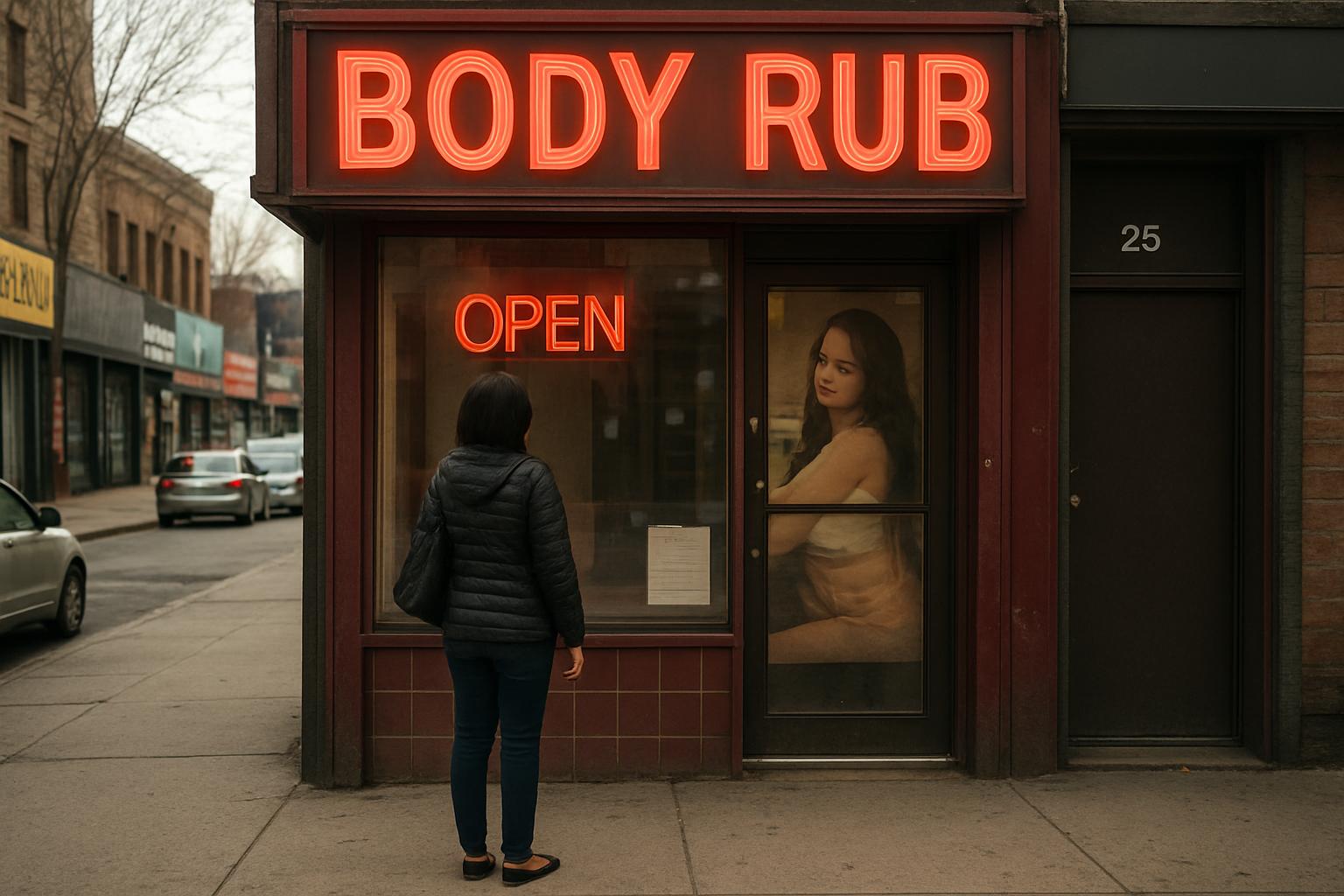
If you decide to visit a place advertising «body rubs» in Queens, NY, small preparations reduce risk. Start by researching: check online reviews, look for a website, and confirm operating hours. Call ahead with specific questions about practitioner qualifications and treatment scope. Legitimate businesses welcome such questions; evasiveness is telling.
On arrival, expect to fill out brief intake forms and discuss any medical issues or injuries. Consent and boundaries should be explicit: a professional will explain what the session includes and ask for consent to proceed. If anything feels off — pressure to do more, requests for additional cash, or an insistence on private, unobserved exchanges — end the session and leave.
Practical dos and don’ts
- Do: Ask to see credentials and confirm the service description matches what you booked.
- Do: Bring a method of payment that provides a record (card or digital), and get a receipt.
- Don’t: Agree to private rooms or back-office arrangements that aren’t part of the written service menu.
- Don’t: Tip as a substitute for paying the posted fee; tipping is fine but should not replace the agreed price.
- Do: Trust your instincts. If something feels exploitative or unsafe, leave and report it if appropriate.
Economic, social, and community considerations
Body rubs and related services are part of a larger tapestry of small-business economies, immigrant labor, and neighborhood character. For many operators, running a small spa or massage business is a livelihood. For local residents, these places can be legitimate sources of wellness and employment, or they can be sources of nuisance and safety concerns.
Conversations about regulation are never purely legalistic. They involve debates about labor protections, human trafficking, zoning, and how public resources should be used. Community boards, elected officials, and advocacy groups all weigh in. Policies that simply close businesses without offering alternatives for workers can push activity further underground; thoughtful enforcement paired with social services tends to produce better outcomes.
Examples of community responses
Some neighborhoods have pursued stricter zoning and licensing requirements to control where certain services can operate. Others have invested in outreach and multilingual resources so workers understand labor rights and how to access help. In places where local health departments partner with community organizations, there is often better compliance with sanitary and licensing standards and improved reporting of illegal activity.
Those models don’t solve everything, but they illustrate a point: the challenge is as much social and economic as it is legal. Policies that balance safety, worker protection, and community standards tend to be more durable than ones focused solely on enforcement.
Resources, reporting, and where to find help
If you have concerns about a specific place — whether you suspect human trafficking, unlicensed medical practice, or a public health problem — there are clear channels to report. For immediate danger or criminal activity, call 911. For suspected trafficking, the National Human Trafficking Hotline can be reached at 1-888-373-7888 or via its online reporting tool. Local health departments and state professional boards handle licensing and sanitation complaints.
For consumers seeking legitimate therapeutic services, verify credentials through state licensing boards or professional massage associations. Many legitimate therapists list memberships and certificates on their websites. If you’re unsure about a practitioner’s claims, ask for the name of their certifying body and follow up independently.
Quick checklist of resources
- Emergency: 911 for immediate threats.
- Human trafficking: National Hotline (1-888-373-7888) and its online portal.
- Local health department: NYC Department of Health and Mental Hygiene for sanitation and public health concerns.
- State licensing authority: check the relevant New York state department for professional certification.
- Community organizations: local immigrant advocacy and worker-rights groups for support and referrals.
| Aspect | What to look for | Quick takeaway |
|---|---|---|
| Credentials | Posted licenses, practitioner certifications, association memberships | Credible places are transparent about qualifications |
| Service description | Clear menus, treatment names, durations, and prices | Ambiguity often signals an attempt to hide illicit services |
| Payment and records | Card acceptance, receipts, written intake forms | Paper trail indicates professionalism and accountability |
| Environment | Clean public areas, well-lit entry, no hidden back rooms | Safe facilities prioritize transparency and hygiene |
| Red flags | Cash-only, evasive staff, offers for «extras,» very short sessions | These are reasons to walk away and possibly report |
Final takeaways
Body rubs in Queens, NY, occupy a range of meanings — from therapeutic massage to illicit services — and that range shapes how you should approach them. Stay informed, prioritize clear credentials and transparent business practices, and use public reporting channels when safety or criminal activity is suspected. Above all, treat interactions with common sense: ask questions, trust what you see, and don’t be shy about walking away if something doesn’t add up. Doing so protects you, the community, and the people who rely on safe, legal work for their livelihoods.
Conclusion
In a borough as varied as Queens, the phrase «body rub» can point to many different realities; being cautious, informed, and respectful of both legal boundaries and human dignity will help you navigate those realities safely and responsibly.