
What people mean when they say “rub-and-tug”
The phrase “rub-and-tug” is shorthand for massage establishments that, intentionally or otherwise, provide sexual services in addition to—or in place of—legitimate therapeutic treatments. It’s a label loaded with implication: of illicit transactions, of regulatory blind spots, of human stories that rarely make the evening news. In discussions about urban life, the term often functions as a catchall for a set of businesses that sit awkwardly between the regulated economy and the underground market.
But language matters. Using the term without context flattens a complex landscape of labor practices, immigration status, policing strategies, public health concerns, and local politics. Across Brooklyn, what gets called a “rub-and-tug” can range from an obvious front for trafficking to a small, informal workplace where workers seek safer conditions and steadier income. Understanding the differences is the first step toward policies that protect people rather than simply criminalize them.
Historical currents: how Brooklyn came to host these businesses
New York City’s sex economy is old enough to have left layers in the urban fabric. From immigrant neighborhoods in the 19th and early 20th centuries to the red-light districts that shifted with zoning and policing, spaces offering erotic services have adapted to the city’s broader transformations. Brooklyn’s growing population, waves of immigration, and shifting commercial rents have all shaped where and how such businesses operate.
Gentrification is particularly relevant. As formerly industrial or low-rent neighborhoods draw new investment, many small businesses—legal and otherwise—either relocate or disappear. Some massage parlors have migrated into more peripheral blocks, seeking lower rents and less scrutiny. Others have been squeezed out entirely, with consequences that ripple through local economies and social networks. These are not purely moral questions; they are urban policy and labor questions.
Law, regulation, and enforcement in Brooklyn
Municipal codes, state laws, and criminal statutes intersect when authorities address illicit massage businesses. Licensing requirements, zoning rules, and health inspections create a framework intended to separate legitimate healthcare providers from illegal operations. Yet enforcement tends to be uneven.
Policing responses range from nuisance abatement and administrative fines to criminal raids and prosecutions. Each approach carries trade-offs. Heavy-handed raids can shut down exploitative operations, but they also risk traumatizing workers, pushing activity further underground, and deterring victims of trafficking from seeking help. Conversely, light-touch regulation may fail to curtail organized criminal networks that profit from exploitation. The challenge for policymakers is to calibrate responses that protect people without creating new harms.
Examples of enforcement strategies
Municipal inspection campaigns often partner local licensing offices with police units and public health teams. These sweeps can identify businesses operating without proper credentials, or uncover broader patterns of labor violations. At the same time, community-based organizations have pushed for approaches that prioritize victim services: warm referrals, multilingual support, and long-term housing and legal assistance.
A balanced enforcement strategy tends to combine targeted criminal investigations of trafficking with administrative measures for licensing violations and robust social services. Evidence from other jurisdictions suggests that focusing on the financial backers of illicit networks—rather than only on on-site workers—yields better outcomes for victim protection.
Labor, vulnerability, and the human stories behind storefronts
Workers in massage establishments are not a monolith. Some are entrepreneurs running legitimate small businesses; others are migrants seeking income in the face of limited opportunities. And some are coerced or trafficked—forced into work under threat, deception, or debt. Conflating these groups obscures who needs protection, who needs enforcement, and who may benefit from alternative labor pathways.
Effective responses must center worker safety. That includes accessible reporting mechanisms that don’t automatically trigger deportation or criminalization, safe workplaces that meet health and labor standards, and pathways to formal employment for those who want it. It also means recognizing that criminal records and immigration status shape the options available to many vulnerable people.
Health and human services considerations
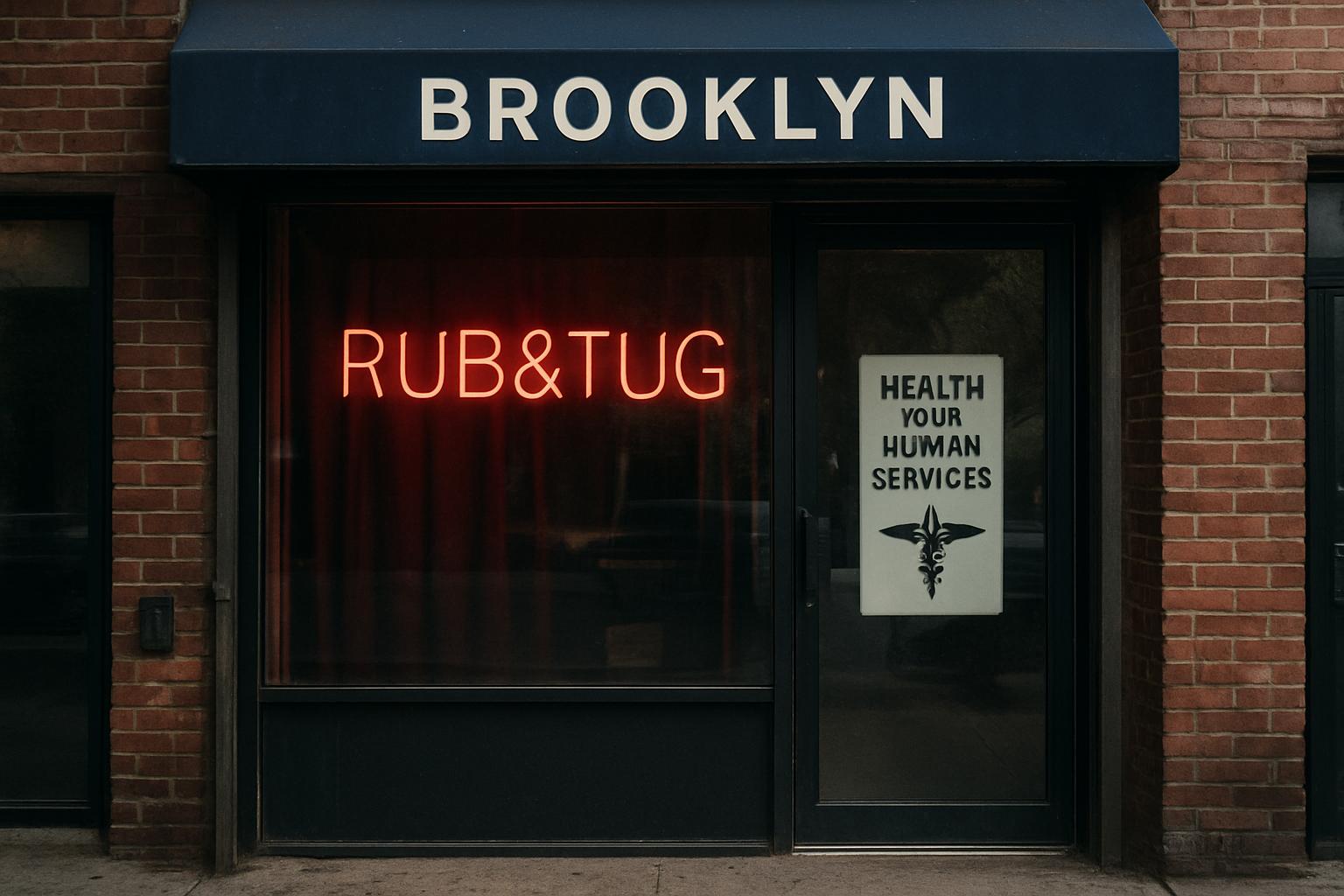
Public health outreach plays an important role. Mobile clinics, multilingual outreach teams, and collaborations with community leaders can reach workers who might mistrust authorities. These efforts should provide standard preventive care, confidential services, and connections to legal aid. When people see a pathway to safety that doesn’t involve immediate arrest or deportation, they’re more likely to cooperate with investigations into trafficking and exploitation.
Prevention work must also tackle demand—educating potential clients about the legal and ethical implications of soliciting exploitative services, and amplifying the voice of workers who want safer, regulated industries.
Neighborhood snapshots: how Brooklyn’s diversity shapes local dynamics
Brooklyn is not one neighborhood but many, and each has its own mix of commercial corridors, immigrant communities, and civic structures. In neighborhoods with dense immigrant populations, informal workplaces may be more common simply because newcomers rely on community networks to find work and housing. In rapidly gentrifying areas, rising rents can push marginal businesses—both legitimate and illicit—into side streets or neighboring districts.
Local community boards and business improvement districts often play an outsized role in how issues are handled. Some neighborhoods pursue stricter enforcement to preserve commercial character; others favor outreach and social services. Recognizing this patchwork is essential for any citywide strategy that needs to be locally adaptable.
Policy options and practical takeaways
There’s no silver bullet. But there are policy levers that, used thoughtfully, can reduce harm while upholding public safety.
- Target the financiers: Focus investigations on organizers and networks that profit from exploitation, rather than solely on workers.
- Strengthen licensing and inspections: Make regulations clear and enforceable, with support for legitimate small businesses to comply.
- Invest in victim services: Fund multilingual hotlines, legal representation, medical care, and housing assistance.
- Mitigate collateral harms: Ensure that reporting does not automatically trigger immigration enforcement, which deters cooperation.
- Engage communities: Work with neighborhood leaders, labor groups, and sex worker advocacy organizations to design realistic interventions.
These measures are not mutually exclusive. Combining regulation, enforcement, and social services produces better outcomes than relying on any single tactic.
Practical steps for policymakers
Local governments can implement several straightforward policies that have real impact. First, create a centralized database of licensing records to make compliance easier to monitor. Second, fund specialized prosecutor units that pursue trafficking and organized crime without penalizing low-level workers. Third, allocate municipal grants for worker education on labor rights and business registration.
Each of these steps requires political will and community trust. Building that trust means transparency about enforcement goals, accountability when agencies fall short, and consistent funding for social services.
Table: Comparing policy options
| Policy Option | Primary Focus | Potential Benefits | Risks or Drawbacks |
|---|---|---|---|
| Criminal raids | Immediate enforcement | Can dismantle criminal operations quickly | May traumatize workers; push activity underground |
| Administrative licensing | Regulation and compliance | Legitimizes businesses; improves health standards | Can be burdensome for small operators; may be evaded |
| Victim services | Protection and recovery | Improves cooperation with law enforcement; aids survivors | Requires sustained funding; long-term results |
| Target financiers | Disrupting organized crime | Weakens networks that profit from exploitation | Complex investigations; resource intensive |
What Brooklyn residents and local leaders can do now
Residents who care about safety and fairness can push for balanced approaches. Attend community board meetings, ask candidates about their plans for labor protections and trafficking prevention, and support local nonprofits that provide direct services. Business owners should make licensing and compliance a priority, and neighborhood associations can work with city agencies to monitor suspicious activity in ways that respect civil liberties.
Importantly, the conversation should center the voices of those directly affected. Workers, survivors, and immigrant communities hold critical insights into what works on the ground. Policies crafted without that input risk doing more harm than good.
Key takeaways
“Rub-and-tug” is shorthand for a complex set of issues. Effective policy balances enforcement against organized crime with protections for vulnerable workers. Public health, labor rights, and community engagement are essential complements to policing. Finally, sustainable solutions require resources—funding for victim services, for inspections, and for long-term measures that reduce demand for exploitative services.
Conclusion
Brooklyn’s rub-and-tug phenomenon is less a single problem and more a mirror of the city’s inequalities: where demand meets vulnerability, and where regulation, market forces, and social services intersect. Addressing it effectively means prioritizing human safety, targeting criminal networks, and investing in the kinds of support that make exploitation less attractive and less profitable—policies grounded in evidence, compassion, and local insight.