
What people notice first
Walk down many commercial strips across the United States and you’ll see a surprising variety of businesses offering touch-based services. Some display professional credentials and sterile décor. Others lean into ambiguous names: All American Body Rub, for example, could read like a local brand, a deliberately vague storefront, or a nod to an older vernacular for hands-on treatments. That ambiguity is the story’s entry point — a short phrase that opens messy questions about health, commerce, and community standards.
Names and signs matter because they set expectations. A name that emphasizes «body rub» rather than «massage» can be shorthand for a range of operations: from experienced licensed therapists working in a small clinic to unlicensed parlors that operate in legal gray zones. Understanding the name is the first step toward distinguishing therapeutic practice from other, potentially exploitative, activities.
A short history of touch and terminology
Therapeutic bodywork in the United States traces back through physical culture movements, immigrant healing traditions, and the professionalization of medicine. Over the 20th century, «massage» evolved into an accepted therapeutic domain with licensing boards, accredited schools, and insurance coverage for some conditions.
At the same time, informal markets for massage persisted. They used different vocabulary — «rub,» «parlor,» «spa» — to signal a less regulated service model. The persistence of these terms reflects more than marketing. It reveals tensions: between legitimacy and informality, between public health and underground demand, and between workers’ desire for self-determination and the vulnerability created by legal precarity.
How businesses operate: models and motives
Not all establishments that use broad names operate the same way. There are discernible business models to keep in mind, and these influence how patrons and policymakers should respond.
Licensed clinical or therapeutic practices prioritize training, client records, hygiene, and standards of care. These businesses typically display state credentials, require appointments, and focus on documented therapeutic outcomes such as pain relief or rehabilitation.
Licensed massage clinics
In a licensed setting you’ll usually find practitioners with credentials from accredited schools, posted state licenses, and an adherence to clearly written policies about consent, draping, and scope of practice. These are the spaces that align with healthcare norms and are often integrated with other allied services like physical therapy.
Prices and marketing are straightforward; the business emphasizes techniques (deep tissue, sports, lymphatic drainage) and professional affiliations. For many customers, these signals reduce risk and increase predictability.
Unregulated or gray-market parlors
Conversely, some parlors operate on the margins. They may offer lower prices, flexible hours, and minimal paperwork. That combination can serve a real demand: people seeking quick relief, lower-cost options, or discretion. But minimal regulation also creates space for exploitation, both of workers and of clients.
These establishments sometimes intentionally evade the language of healthcare. «Body rub» is shorter, less medicalized, and can obscure whether services fall within legal, therapeutic boundaries or involve illicit sexual services. Agencies and community groups often confront the downstream effects — public nuisance complaints, human trafficking investigations, and public safety concerns.
Regulation, enforcement, and public policy
Local governments try to balance safety, civil liberties, and commerce. Their tools include licensing, zoning, inspections, and criminal enforcement. Each tool has trade-offs: heavy enforcement can close exploitative operations but also push them further underground, making conditions worse for workers.
Effective policy often combines clear licensing standards with labor protections and community outreach. Law enforcement that focuses solely on arrests without victim services risks criminalizing people who may be vulnerable or trafficked. Conversely, lax oversight leaves room for exploitative actors to flourish.
Common regulatory measures
- State licensing boards that require formal training and background checks for therapists.
- Zoning rules that separate massage businesses from sensitive areas like schools or churches.
- Periodic health and safety inspections to ensure sanitary practices and proper documentation.
- Task forces that pair police with social services for suspected trafficking cases.
Where these measures work best, they are paired with clarity about permissible services and meaningful support for workers who wish to transition into formal employment — a pragmatic mix of carrot and stick.
Worker rights, safety, and dignity
Workers in both licensed clinics and gray-market parlors face overlapping concerns: safety, fair pay, inconsistent hours, and exposure to verbal or physical abuse. For many, the distinction between a secure job and a precarious one hinges on legal recognition and access to benefits.
When massage therapists are properly licensed, they have professional recourse. They can report abuses, refuse unsafe clients, and access continuing education. Workers in unlicensed settings often lack those protections. Community organizations and labor advocates argue that policies should reduce incentives for unlicensed operation while simultaneously expanding pathways into regulated work.
Practical protections that help
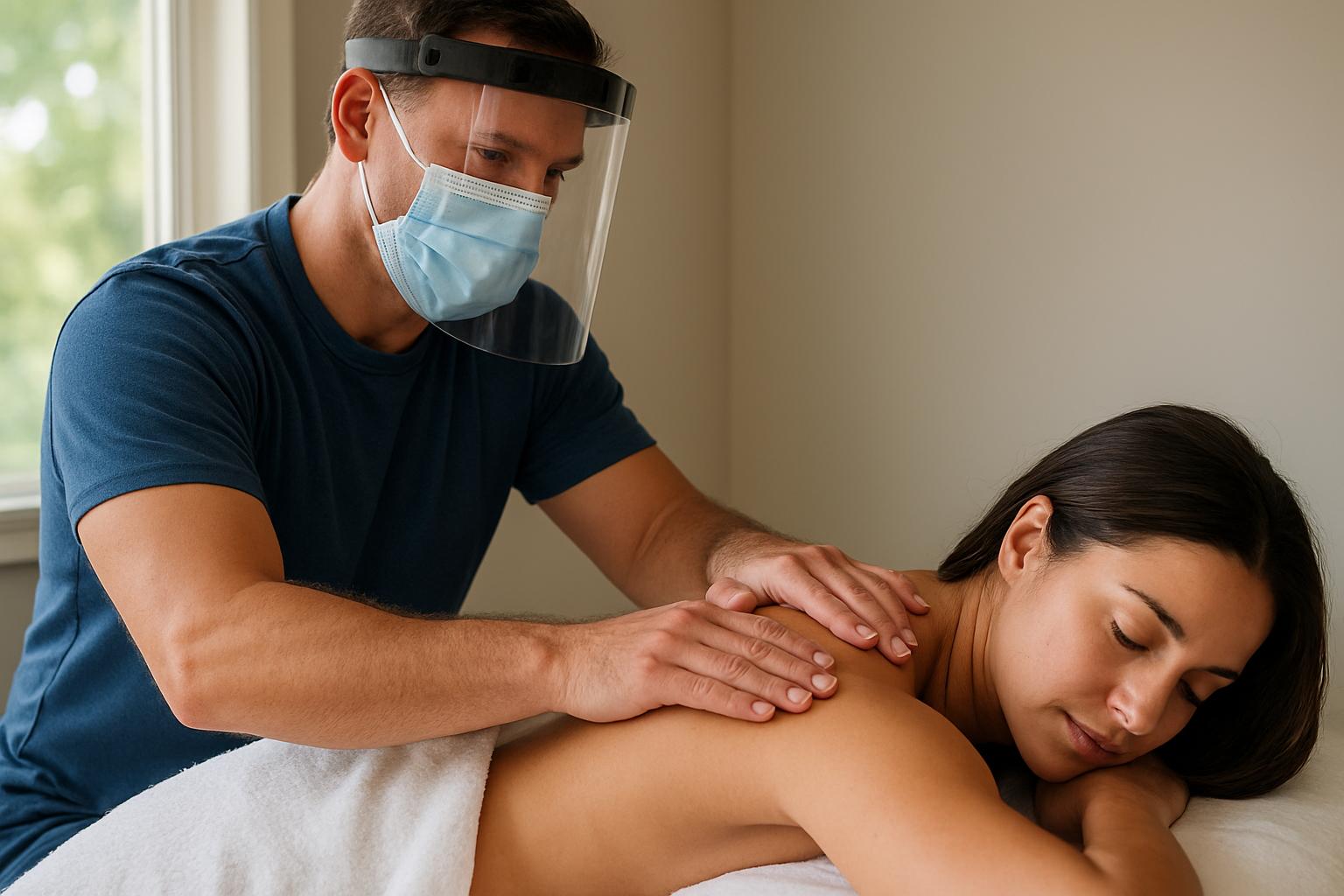
Workers and advocates emphasize several actionable protections: transparent scheduling and pay, visible posted policies on consent and refunds, panic buttons or buddy systems for late shifts, and access to reporting channels that are not penalizing. These changes are often inexpensive and immediately impactful.
Consumer safety: how to tell the difference
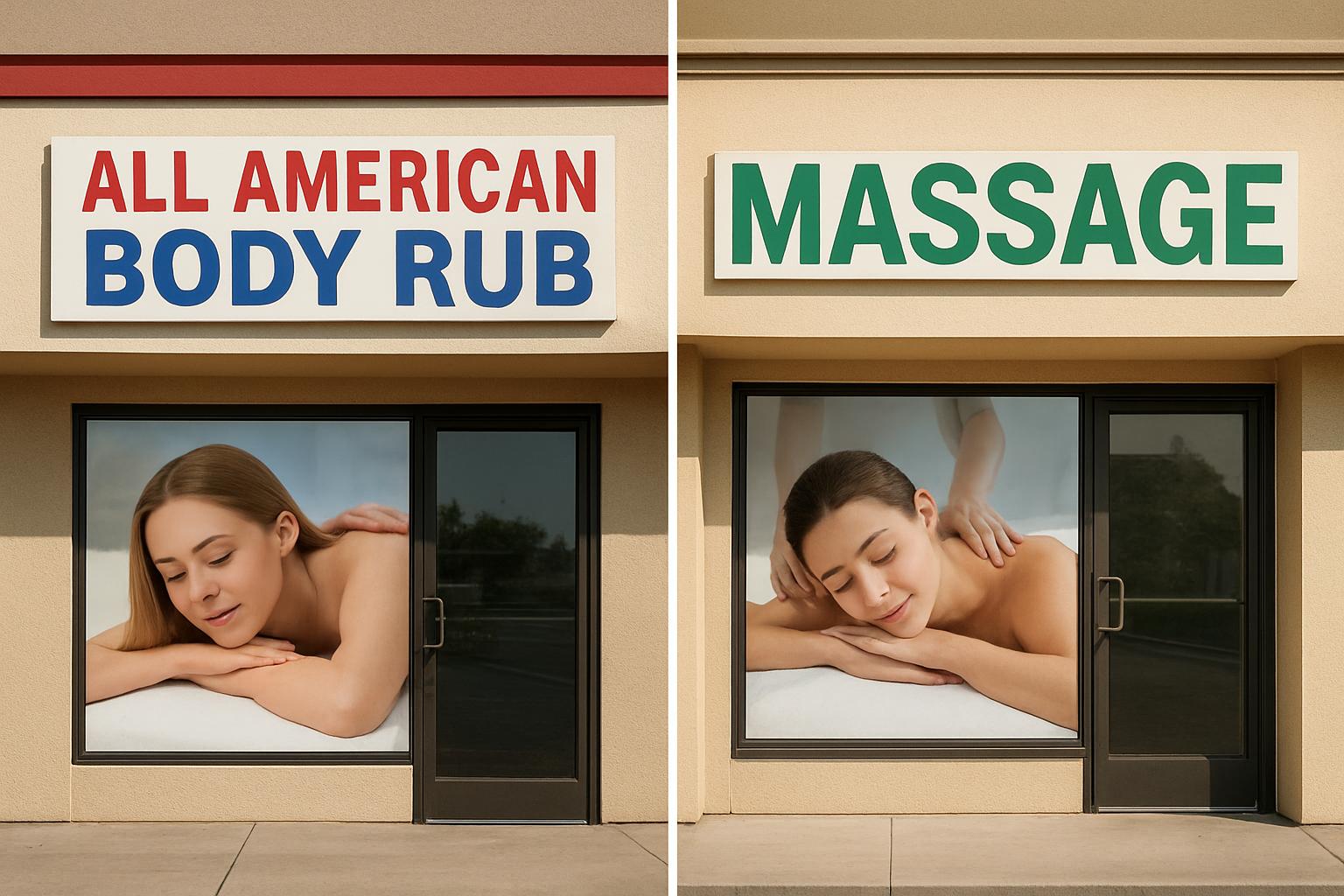
If you’re a consumer trying to make a safe choice, a handful of concrete signs can help you find legitimate therapeutic care rather than a high-risk situation. Some indicators are visual; others require asking a few direct questions.
Look for posted credentials and an intake form. Licensed clinics will ask about medical history, allergies, and current medications. They will have a written consent protocol and explain what to expect during a session. If a business is evasive about credentials or pressures you into secrecy about services, consider it a red flag.
Quick checklist for consumers
- Verify state licensure online when possible.
- Ask if the therapist is trained in the specific modality you want.
- Avoid businesses that advertise sexual services or use suggestive language in reviews or signage.
- Trust your instincts — if something feels off, leave and report concerns to local authorities.
Language matters: stigma, nuance, and reform
The way we talk about businesses like All American Body Rub shapes the response from neighbors and officials. Stigmatizing language can silence workers and discourage reporting; euphemistic language can keep exploitation hidden. Finding neutral terms that separate therapeutic practice from criminal activity matters for public health and policy.
Reformers often advocate for language that emphasizes licensing, consent, and occupational safety. That approach reframes the conversation away from moral panic and toward practical governance: what rules, resources, and supports reduce harm and foster dignity?
Examples and local experiments
Cities across the country have tried different mixes of regulation and community programming. In one coastal city, permits were streamlined for legitimate massage businesses while inspections focused on hygiene and posted credentials; the result was a visible reduction in illicit storefronts and a moderate uptick in licensed practitioners. In another municipality, heavier enforcement without victim support led to prosecutions but also to greater invisibility of problematic operations.
These examples illustrate a lesson for policymakers: enforcement alone is brittle. Policies that pair clear, accessible pathways into the licensed economy with victim-centered services and targeted enforcement tend to produce the most durable public safety outcomes.
| Issue | What it means | Practical takeaway |
|---|---|---|
| Naming and advertising | Terms like «body rub» can be ambiguous and mask service scope | Check credentials and intake forms rather than relying on names |
| Licensing | Provides professional standards and recourse for workers | Prefer licensed providers; verify online when possible |
| Enforcement | Necessary but not sufficient—can push activities underground | Pair enforcement with social services and worker pathways |
| Worker protections | Reduce exploitation and improve public health outcomes | Support training programs and accessible licensing |
Final takeaways
All American Body Rub, as a name, is a thumbnail portrait of broader tensions: between licensed care and the informal economy, between healthy demand for touch and the harms that can arise when services are unregulated. Thoughtful responses avoid binaries. They combine clear regulatory standards, accessible pathways for workers to gain credentials, consumer education, and trauma-informed responses where abuse is suspected. That mix — practical, humane, and evidence-driven — reduces harm and preserves legitimate options for people who rely on therapeutic touch.
Conclusion
Sorting the signal from the noise requires curiosity and caution: look for posted credentials, ask questions, support policies that protect workers, and remember that a storefront name is only the beginning of a longer story about health, law, and community responsibility.