
Introduction — a neighborhood’s uneasy discovery
Park Slope has long been known for brownstones, playgrounds, and a certain urban calm. Lately, that calm has been punctured by reports of “rub-and-tug” operations — illicit massage parlors offering sexual services under the guise of legitimate businesses. The phrase carries a lot of baggage and a lot of uncertainty for residents who want safety and dignity for everyone in the neighborhood.
This article looks beyond the gossip to explain what these establishments are, why they appear in residential areas like Park Slope, how the city and communities respond, and what practical steps neighbors can take without compromising safety or compassion.
What is a “rub-and-tug” and why does the term matter?
The shorthand “rub-and-tug” refers to businesses marketed as massage or wellness services that, in practice, offer sexual services. The term is blunt but useful because it distinguishes between licensed therapeutic massage and commercial sex activity masquerading as a health service.
Words matter in public debate. Calling an operation a “rub-and-tug” invites specific policy and policing responses, whereas calling it a “massage parlor” can obscure the criminal and exploitative elements. For neighbors, the key distinction is whether activity is legal, consensual, and free from coercion.
How these operations show up in Park Slope
Illicit parlors are not unique to one borough or neighborhood; they follow economic and regulatory fault lines. In Park Slope they tend to appear in two ways: converted storefronts in quieter commercial strips and home-based operations in multi-family houses. Both formats aim to be discrete.
Operators exploit gaps: inconsistent inspections, complicated licensing, and community hesitance to confront neighbors. That opacity makes it hard for residents to know whether they’re witnessing illegal activity, privacy violations, or simply an unfamiliar business model.
Patterns and motivations
Several practical forces explain the rise or persistence of these operations: low rent in certain micro-markets, the demand for discreet sexual services in dense cities, and the profitability compared with legitimate, regulated businesses. For some owners, it’s a calculated risk; for some workers, especially migrants or those with precarious immigration status, it can be survival under coercive conditions.
Understanding motivations helps tailor responses. Treating every case as identical — purely criminal or purely moral failing — misses the complexity and can harm people who are being exploited.
Legal frameworks and enforcement challenges
New York City and state laws criminalize prostitution and certain unlicensed business activities, and licensing boards regulate therapeutic massage. Yet enforcement is uneven. Police stings, code inspections, and licensing revocations are tools that can close a problematic operation, but they are resource-intensive and sometimes counterproductive.
Enforcement-heavy approaches can push activity further underground or displace it to other neighborhoods. They can also make it harder for victims to come forward if they fear arrest. Conversely, a hands-off approach leaves communities feeling unsafe and ignored.
Examples of enforcement outcomes
When authorities conduct coordinated actions — combining police, licensing authorities, and social-service providers — results are often more durable. One-time raids that ignore the social-service needs of workers tend to result in quick reopenings or new locations. Effective interventions usually include victim outreach, immigration support, and follow-up inspections.
That coordination is hard to sustain. Budget constraints, competing priorities, and political optics make it easy for responses to be piecemeal. For Park Slope, this means residents see a cycle of complaints, temporary closures, and reappearances.
Summary table: stakeholders, concerns, and typical responses
| Stakeholder | Main Concerns | Common Responses |
|---|---|---|
| Residents | Safety, property values, neighborhood character | Complaints to 311/NYC, community board meetings, neighborhood watch |
| Workers inside parlors | Exploitation, risk of arrest, trafficking | Few safe reporting channels; reliance on NGOs |
| Operators | Profit, low overhead, avoidance of enforcement | Registration loopholes, frequent relocations |
| Law enforcement & regulators | Crime prevention, limited resources, legal constraints | Stings, license checks, multi-agency task forces (when possible) |
| Advocates & service providers | Worker protection, anti-trafficking, public health | Outreach, hotlines, legal aid |
Human impact: trafficking, labor, and health
Not every illicit massage parlor involves human trafficking, but trafficking and coercion are real and documented risks. Workers may face debt bondage, threats, confiscated documents, or restricted movement. These are not abstract harms; they are the lived experiences of people who need legal and social support.
Public health is also at stake. Unregulated settings can evade sanitation standards and labor protections, increasing vulnerabilities for workers and clients. Policies that only focus on shutting doors without offering pathways to safety can deepen harm.
Why victim-centered approaches matter
A victim-centered response prioritizes consent, safety, and the option of exit. That sometimes conflicts with a purely punitive model focused on arresting workers, who may be undocumented or coerced. Successful models in other cities include anonymous reporting lines, dedicated social workers, and coordination with community groups that can offer temporary shelter, legal help, and language services.
Park Slope’s organized neighborhood associations and active non-profits could become anchors for such support, but it requires political will and funding.
What residents can do — practical, safe steps
Confrontation is rarely wise. Instead, neighbors can take measured actions that address safety while respecting individual rights.
- Document, don’t escalate: Keep a record of times, noise, or suspicious entries without taking personal risks. Photos of signage or business hours can help investigators.
- Use official channels: File complaints through 311 for code violations and provide detailed information to the local community board and police precinct if you suspect illegal activity.
- Support local service providers: Donate to or volunteer with organizations that assist trafficking survivors — legal aid groups, shelters, and multilingual hotlines.
- Attend community meetings: Make your concerns visible in a public forum to encourage coordinated responses that include social services.
- Prioritize safety: If you believe someone is in immediate danger, call 911. For non-emergencies involving potential trafficking, contact dedicated hotlines run by nonprofit organizations or city task forces.
These steps balance civic responsibility and compassion. They also help build a record that, over time, can push city agencies to act more decisively.
Policy alternatives — beyond raids and shuttering
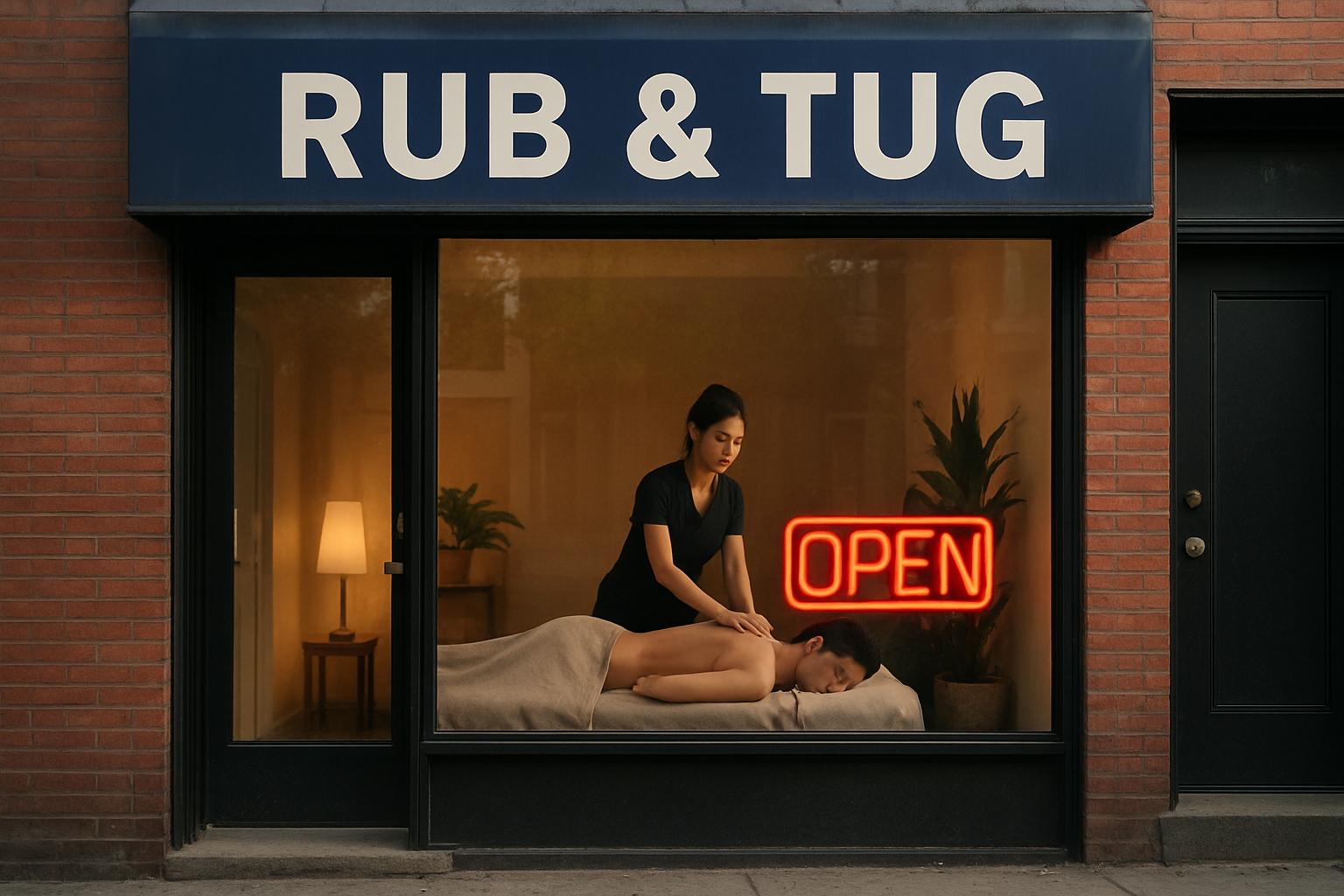
City policymakers face a choice among imperfect options. Continuing with periodic raids addresses immediate complaints but often fails to prevent recurrence. A shift toward regulation, better inspection, and accessible reporting mechanisms could reduce the underground market, but would require political appetite and legal changes.
Another route is bolstering victim services and worker protections. That doesn’t legalize illicit sexual commerce; it creates exit pathways and encourages reporting. Some advocates argue for decriminalization of sex work to reduce harm, while others insist on strict enforcement to disrupt criminal networks. The tension between harm reduction and moral or legal concerns complicates any single policy answer.
Practical policy recommendations for Park Slope
- Fund a multi-agency task force that includes social services, licensing officials, and law enforcement focused on repeat offenders.
- Create anonymous reporting tools and ensure language access for non-English speakers to report coercion safely.
- Increase spot inspections and require clearer signage and licensing requirements for massage businesses.
- Invest in community education so residents can distinguish between legitimate health services and predatory operations without resorting to vigilantism.
Takeaways — realistic expectations for neighbors and leaders
Park Slope’s situation is neither unique nor insoluble. It’s a test of civic capacity: how a neighborhood protects public safety without harming vulnerable people. Quick fixes rarely last. Durable solutions blend enforcement with services.
Neighbors can make meaningful contributions by documenting patterns, using official channels, supporting nonprofits, and pressing elected officials for sustained, coordinated action. That mix reduces harm and helps restore the public trust that every community needs.
Conclusion
Rub-and-tug operations in Park Slope expose a web of legal, social, and human issues: they demand responses that are tough on criminal networks but compassionate toward exploited workers, and they require neighbors, city agencies, and service providers to coordinate in ways that go beyond one-off crackdowns; only by combining careful enforcement, stronger oversight of businesses, and robust support services can the neighborhood reclaim safety while protecting the dignity of those most at risk.